
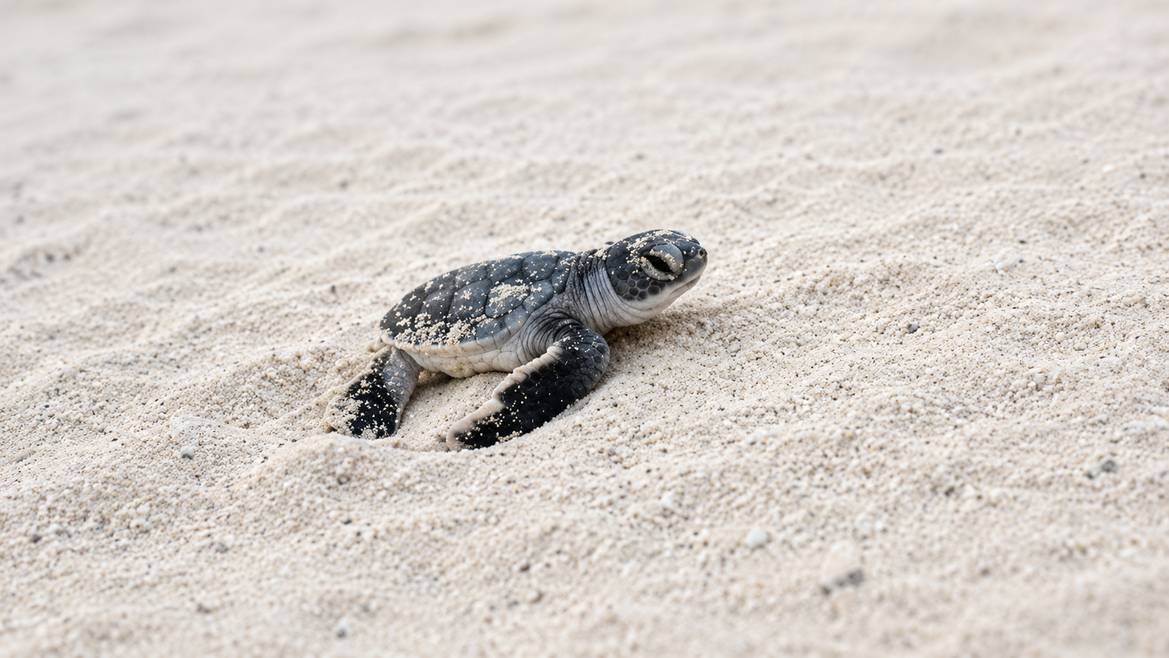
Every summer, something quiet and remarkable happens along our stretch of the Caribbean. Female sea turtles, some more than a hundred pounds, pull themselves out of the waves at night, dig nests in the warm sand, and lay their eggs only steps from where we sleep. A few weeks later, tiny hatchlings break free and scramble toward the moonlit horizon. At Hacienda Chekul, tucked into the wild beauty of Sian Ka’an, we live alongside this cycle every season, and watching it happen is one of the most moving experiences the Riviera Maya can offer.
This guide is for travelers who want to witness turtle season the right way. We will share when nesting and hatching happen along the Caribbean coast, where to go for ethical viewing, what the rules are (and why they matter), and how to plan a trip that supports the turtles rather than disturbs them. The goal is simple. Come for the magic, leave the beach a little better than you found it.
When Is Turtle Season on the Riviera Maya?
Turtle season on the Caribbean coast of Mexico runs roughly from May through October, with hatching extending into November and occasionally early December. Along Quintana Roo’s beaches, including Tulum, Akumal, Xcacel, and Sian Ka’an, three species nest here: the green sea turtle (Chelonia mydas), the loggerhead (Caretta caretta), and the rarer hawksbill (Eretmochelys imbricata). Eggs incubate for about 45 to 60 days, which is why you can see nesting females and brand-new hatchlings on the same beach in the same week.
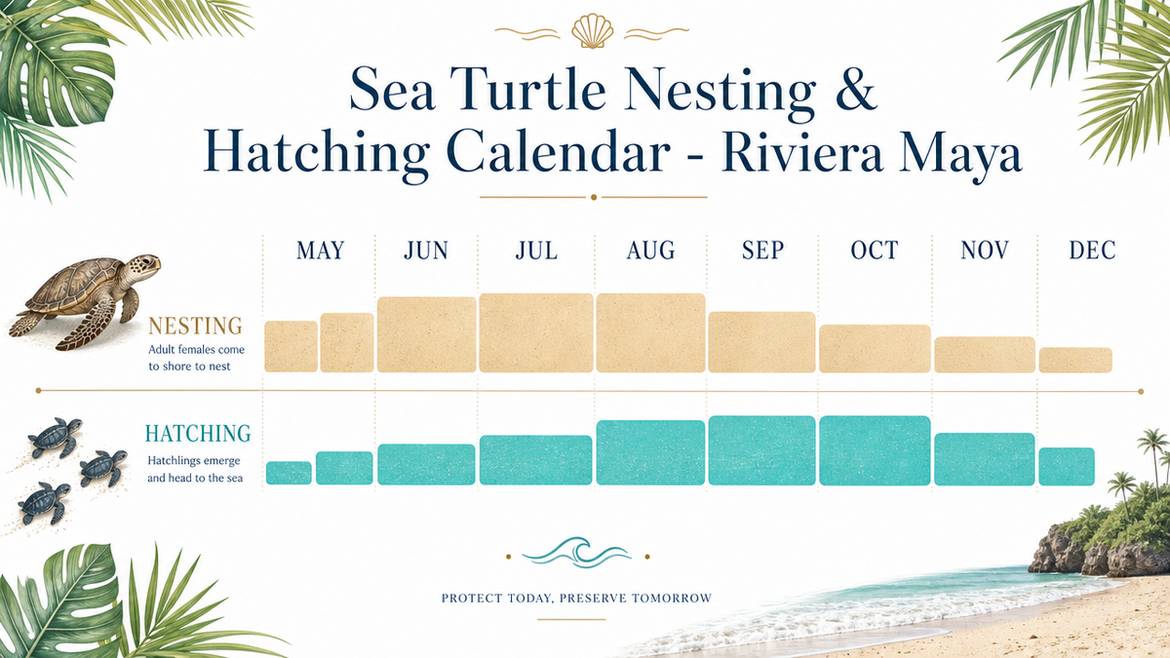
Here is the month-by-month rhythm we have observed near our villa in Sian Ka’an.
- May. Season opens. The first loggerheads and a few greens begin to crawl ashore at night. Hatching has not started yet.
- June. Nesting is clearly underway across the coast. Earliest nests laid in May begin hatching by late June.
- July and August. Peak nesting months. This is when you have the best chance of seeing a female lay eggs, usually between 11 p.m. and dawn. Hatchings are also rolling now.
- September. Nesting slows, but hatchings intensify. Nests laid in July and August are emerging.
- October. Last regular nesting on key beaches. Monitoring camps at sites like Xcacel run through October 31. Hatchings continue strong.
- November. Light nesting still possible. Hatchings of late-season nests continue, sometimes into December.
If your heart is set on watching a female nest, aim for late June through August. If you want to witness hatchlings making their first dash to the sea, plan for late August through early October. Either way, plan for evening or pre-dawn timing. This is a night-time miracle.
Where to Witness Sea Turtle Nesting Responsibly
There is a difference between seeing a turtle and seeing a turtle the right way. The Caribbean coast has a handful of places where conservation programs allow respectful viewing, usually in small guided groups, with no white light, no touching, and no flash. These are the spots we recommend to our guests at Hacienda Chekul.
Xcacel-Xcacelito Sea Turtle Sanctuary
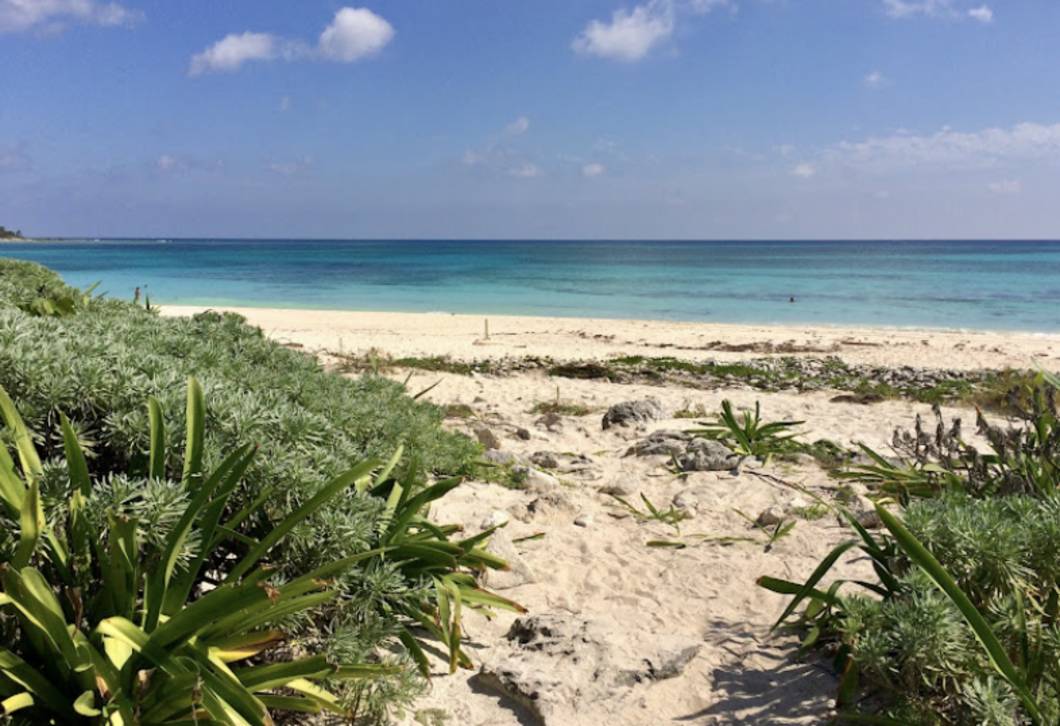
If you only visit one nesting beach on the Riviera Maya, make it Xcacel. This small double bay between Akumal and Tulum is the oldest sea turtle conservation camp in the region and is widely considered one of the most important green turtle nesting beaches in Mexico. Because it is a state-protected natural area, it has stayed remarkably wild. No big resorts, no music, no plastic, no food. Just the jungle, the dunes, and the sea.
One recent visitor described it well: “A beautiful little beach that clearly puts wildlife first. There’s a strict policy of no plastic or food allowed, which really helps protect the environment and keep the area pristine.” The entry fee (around 100 to 150 pesos) goes directly toward the sanctuary’s conservation work.
- Rating: 4.6 stars on Google
- Address: Xcacel 504, 77533 Quintana Roo, Mexico
- Hours: Tuesday to Sunday, 10 AM to 4 PM (closed Mondays)
- Visit tips: Bring something to sit on, sun protection, and water. No food allowed. Snorkeling here is among the best in the region.
- Nesting access: Through authorized guided night groups operated by the sanctuary and partner conservation NGOs only.
- View on Google Maps
Centro Ecológico Akumal (CEA)
CEA is the longest-running turtle conservation group in Akumal, and they are the people you want to talk to if you want a guided nesting walk along this stretch of coast. They run educational programs, beach clean-ups, and supervised night tours from May through the end of September, all carefully designed to let visitors observe without disturbing the animals.
If you stay with us during nesting season, this is the program we point our guests to first. The CEA team is strict about the basics: no lights, no flashes, no touching, controlled distance. That is exactly what responsible nesting tourism should look like.
- Rating: 3.7 stars on Google
- Address: Carretera Puerto Juarez ~ Tulum, Km 104, 77776 Akumal, Quintana Roo
- Phone: +52 984 875 9095
- Website: ceakumal.org
- Hours: Monday to Friday, 9 AM to 5 PM (closed weekends, but night patrols run on schedule during nesting season)
- What to book: Guided night turtle walks (May to September), educational tours, volunteer clean-ups.
- View on Google Maps
Sian Ka’an Biosphere Reserve
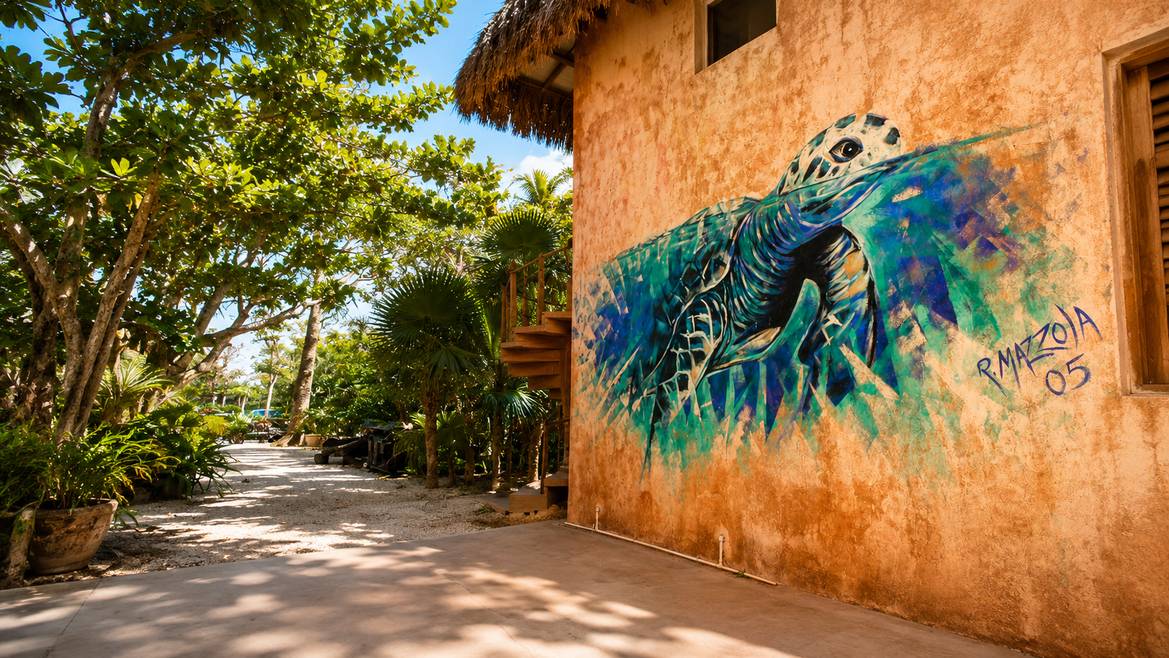
We are biased about this one, because Hacienda Chekul sits right inside the Sian Ka’an Biosphere Reserve, a UNESCO World Heritage site that protects more than 1.3 million acres of jungle, wetlands, mangroves, and coastline. Sea turtles nest along the long, dark, undeveloped beaches here, and the conditions are exactly what they need: no resort lighting, no crowds, no noise.
- Rating: 4.6 stars on Google
- Address: Quintana Roo, Mexico (south of Tulum)
- Managed by: CONANP (Mexico’s National Commission of Natural Protected Areas)
- What to book: Guided boat tours, lagoon snorkeling, mangrove channels, bird watching. Ask your villa or eco-tour operator if any supervised nest-monitoring activities are running during your stay.
- View on Google Maps
The Rules That Make This Possible
Sea turtles in Mexico are fully protected under federal law (the Official Norm NOM-162-SEMARNAT), enforced locally by CONANP, the state of Quintana Roo, and conservation NGOs like CEA and Flora, Fauna y Cultura. The rules are strict for a reason. A single careless tourist with a phone flashlight can cause a female to abandon her nest, or disorient an entire wave of hatchlings away from the sea.
Here is the short list every visitor should know during turtle season on the Riviera Maya.
Do:
- Join only authorized, guided patrols or tours run by CEA, Flora, Fauna y Cultura, or another accredited program.
- Stay at least 10 meters back from any nesting female, ideally further, and stay behind her line of sight.
- Keep beach-facing lights off after dark from May through October. Close curtains and shades at night.
- Use only red-light flashlights if guides provide them. Otherwise, no light at all.
- Move slowly, stay low, and stay quiet.
- Report any sightings of turtles, tracks, or hatchlings to your villa staff or local biologists.
- Use reef-safe sunscreen, or skip sunscreen entirely and cover up with a swim shirt.
Don’t:
- Don’t use phone flashlights, headlamps, or camera flashes on the beach at night.
- Don’t touch turtles, eggs, nests, hatchlings, or tracks. Tracks are research data.
- Don’t drive vehicles of any kind on nesting beaches.
- Don’t ask a hotel or operator to hold hatchlings until you can “watch a release.” This is illegal under NOM-162. Hatchlings must be released immediately after they emerge.
- Don’t remove dune vegetation, set up cabanas in the nesting zone, or place beach furniture above the high-tide line at night during nesting season.
- Don’t feed, chase, ride, or corner turtles in the water.
- Don’t book any tour that promises you can hold a turtle or pose for flash photos with one. Walk away from those operators.
Where to Stay for Turtle Season on the Caribbean Coast
The single biggest decision you make about turtle season is where you sleep. A villa or eco-hotel that takes conservation seriously will quietly do a dozen things you might not notice: dim, shielded outdoor lights, beach-facing curtains, no music after a certain hour, no beach bonfires, no cabanas on the high-tide line during nesting months.
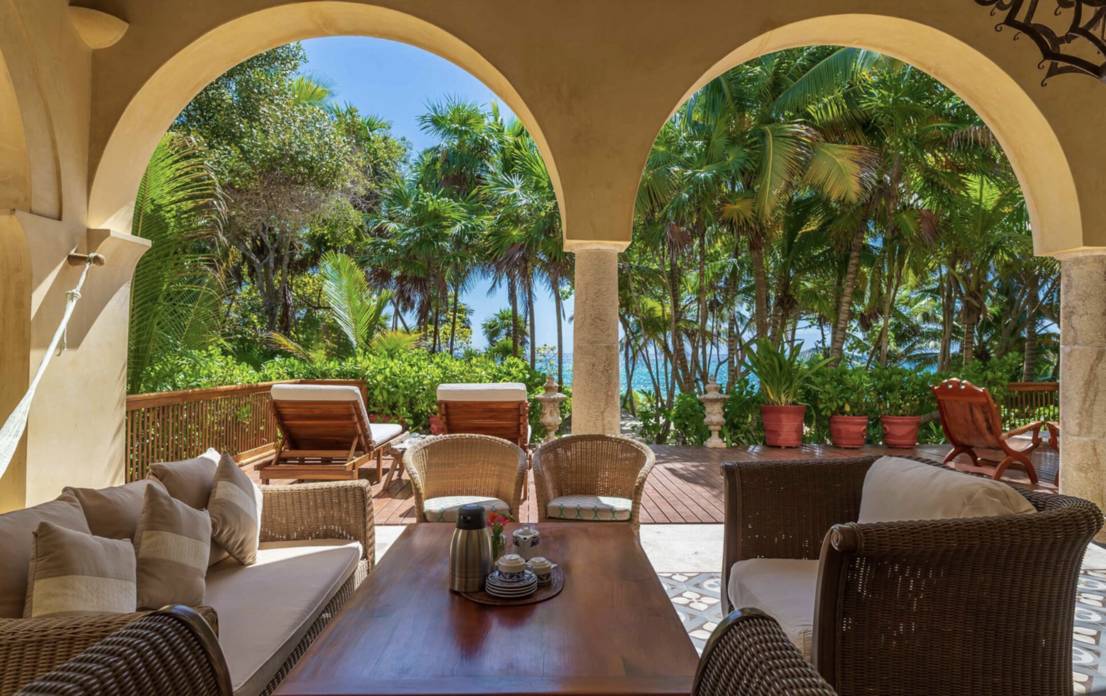
Hacienda Chekul sits inside the Sian Ka’an Biosphere Reserve, on a six-acre jungle estate that meets the Caribbean. We are committed to sustainability practices that protect this coastline, including low-impact lighting, native landscaping, and quiet hours that align with turtle nesting needs. If you are planning a stay during nesting season, our team can also coordinate with local conservation programs to help you book ethical experiences.
A Final Word from Sian Ka’an
There is no experience on the Caribbean coast quite like sitting near a nesting female under starlight, or watching hatchlings disappear into the surf as the sun rises. It is humbling. The turtles have been doing this for tens of millions of years, and they are doing it on the very same beaches their ancestors used.
If you visit during turtle season on the Riviera Maya, you are stepping into something ancient and fragile at the same time. Come prepared, choose your operators carefully, keep the beach dark at night, and stay with people who take this responsibility as seriously as the turtles deserve. We would love to host you at Hacienda Chekul for a stay built around the quiet rhythm of Sian Ka’an. To start planning your nesting-season trip, visit our booking page or contact our team directly.
Frequently Asked Questions
When is turtle season on the Riviera Maya?
Turtle nesting on the Caribbean coast of Mexico runs from May through October, with hatching extending into November and sometimes early December. Peak nesting is July and August, and peak hatching is late August through early October.
Which sea turtles nest along the Riviera Maya?
Three species nest along this coast: the green sea turtle (Chelonia mydas) and the loggerhead (Caretta caretta), which are the most common, and the hawksbill (Eretmochelys imbricata), which nests less frequently but is present in the area. Leatherbacks are occasionally seen offshore.
Can visitors watch sea turtles nest in person?
Yes, but only through authorized, guided programs. Centro Ecológico Akumal runs night walks during nesting season, and Xcacel-Xcacelito admits small groups for educational observation. Independent night walks on nesting beaches are restricted, and using flashlights or flash photography is prohibited.
Is it legal to release baby sea turtles in Mexico?
Staged “release shows” for tourists are illegal under Mexican federal law (NOM-162). Hatchlings must be released immediately after they emerge from the nest, with minimal handling. If a hotel or operator offers a scheduled hatchling release for guests, that is a red flag.
Where can I swim with sea turtles on the Riviera Maya?
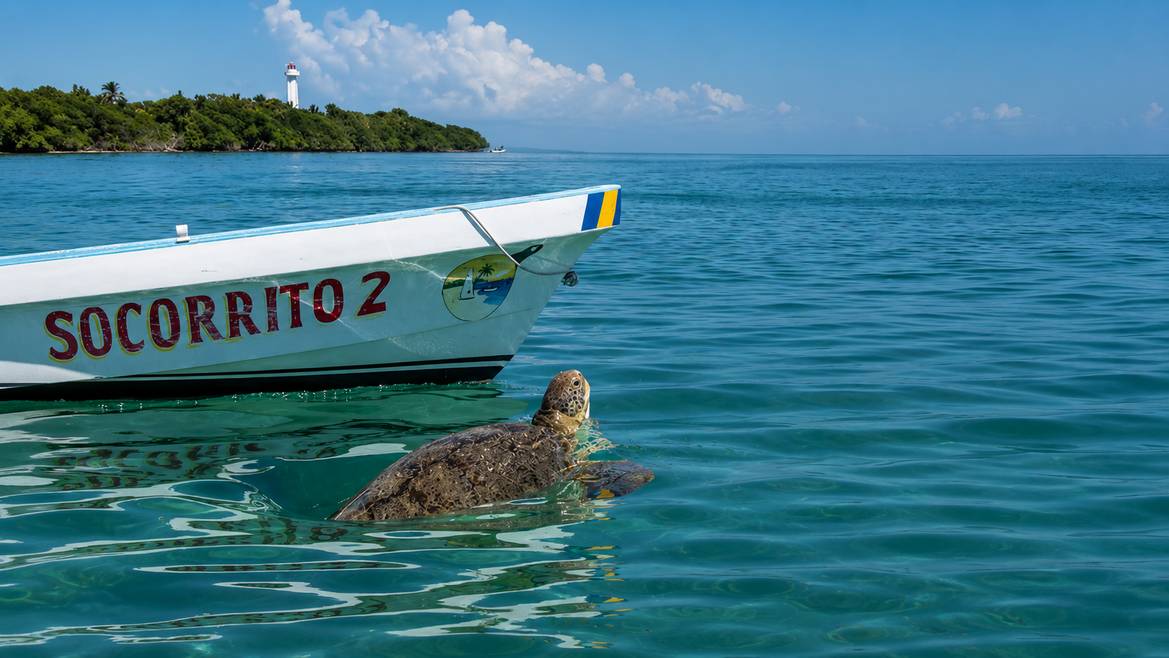
Akumal Bay is the most famous spot for snorkeling with green sea turtles year-round. Sian Ka’an and the protected reefs near Xcacel also offer turtle encounters with the right guide. All in-water encounters require licensed operators and follow strict no-touch, no-feed, no-chase rules.
What should I do if I find a sea turtle nest or hatchlings on the beach?
Do not touch them or intervene. Mark the area mentally, keep lights off, keep your distance, and alert hotel or villa staff, who will contact the local biologists or rangers. Hatchlings disoriented by lights can be gently shielded from light pollution by trained staff, but should never be picked up by visitors.